


News Notification

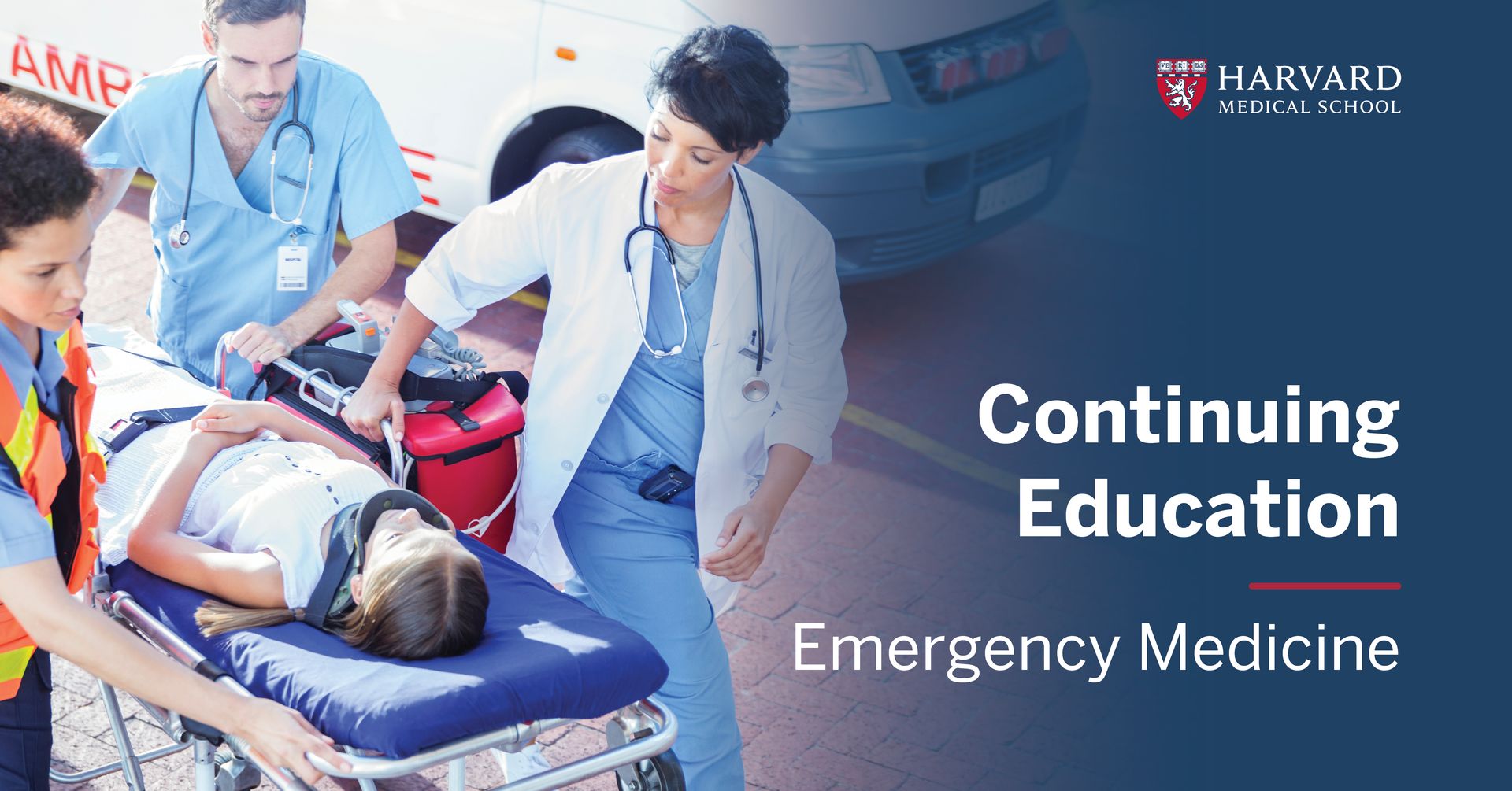
Harvard Emergency Medicine Updates & Current Practices 2026

4 views Tags: Harvard Medical School Emergency Medicine CME

Advanced Emergency Medicine CME from Harvard Medical School

Enhance your emergency medicine practice with Harvard Emergency Medicine Updates & Current Practices 2026, a comprehensive live-stream virtual postgraduate course designed for emergency physicians, primary care clinicians, physician assistants, nurse practitioners, nurses, and EMTs. This intensive online CME program delivers practical, evidence-based updates across the full spectrum of emergency and critical care medicine.

Through expert-led lectures, interactive discussions, case-based learning, and live Q&A sessions, participants will review current diagnostic and therapeutic strategies for critically ill and injured patients encountered in the emergency department. Topics span cardiovascular emergencies, trauma, critical care, geriatrics, infectious diseases, pediatrics, ultrasound, toxicology, airway management, health equity, and operational challenges in modern emergency medicine.

This fast-paced educational experience emphasizes practical clinical decision-making, emerging evidence, and real-world application to improve emergency department workflow, patient safety, and clinical outcomes.

Highlights of this course include:

  • Updated management strategies for cardiac arrest, septic shock, pulmonary embolism, and acute stroke
  • Advanced airway, vasopressor, trauma, and critical care emergency medicine pearls
  • Current approaches to point-of-care ultrasound (POCUS), including cardiac, lung, eFAST, pediatric, and procedural applications
  • Evidence-based care for geriatric emergencies, psychiatric patients, and pediatric presentations
  • Updates in emergency department operations, health equity, informatics, and disaster response
  • Recorded sessions available for flexible asynchronous viewing
  • And more…

* Date of Original Release: April 27 – May 1, 2026

LEARNING OBJECTIVES

At the completion of this course, participants should be able to:

  • Identify underlying tachydysrhythmias in emergency clinical settings
  • Apply up-to-date therapeutics and evidence-based protocols for cardiac arrest management
  • Integrate current evidence-based approaches in the treatment of acute hemorrhagic stroke
  • Utilize modern diagnostic algorithms and treatment strategies for pulmonary embolism and deep vein thrombosis
  • Incorporate point-of-care ultrasound findings into emergency department decision-making
  • Improve emergency department care through evidence-based, patient-centered, and equity-focused clinical practice

HARVARD EMERGENCY MEDICINE UPDATES & CURRENT PRACTICES 2026

0 0 votes
Article Rating

HARVARD EMERGENCY MEDICINE UPDATES & CURRENT PRACTICES 2026
1. Welcome — Calvin Huang

2. Echo in Pulmonary Embolism — Hamid Shokoohi

3. Emergency Management of Burns — Robert Sheridan

4. AI in the ED — Sayon Dutta

5. Clinical Informatics in the ED — Shuhan He

6. Geriatric Falls — Shan Liu

7. Impact of Boarding on Geriatric Patients — Shan Liu

8. Scrotal Pain in the ED — Andrew Eyre

9. ARDS — Peter Hou

1. Professionalism: What Does It Really Mean and Why Do We Care? Implications for Patient Safety, Collegiality, and Career Satisfaction — Jonathan Sonis

2. Mild Head Trauma — Pierre Borczuk

3. Cardiac Arrest — Sean Kivlehan

4. Improving Emergency Department Patient Experience: Principles and Practice — Benjamin White

5. Innovation in Emergency Medicine: Challenges and Opportunities — Benjamin White

6. Tele-Disaster Medicine: From COVID to Ukraine — Jarone Lee

7. Current Practice in Newborn Fever — Jane Preotle

8. Airway Advances — Annette Ilg

1. POCUS Cardiac and Lung — Nicole Duggan

2. POCUS E-FAST — Nour Al Jalbout; Alexander Belaia

3. POCUS: Procedures (IV, LP) — Calvin Huang

4. POCUS: Pediatric Cases — Sigmund Kharasch

5. How to Read Ischemia on ECGs — John Nagurney

6. Practice Updates in Acute PE — Angela Jarman

7. Critical Care Double Feature: Push Dose Pressors in the ED and Severe Alcohol Withdrawal — Paul Jansson

8. 10 Things You Never Imagined About Monitoring Blood Pressure: Practicality, Physiology, and Attention-Seeking Hyperbole — Andrew Reisner

1. Beyond “Medical Clearance”: ED Evaluation of the Patient Presenting with Acute Psychiatric Complaints — Lauren Nentwich

2. Update on the Treatment of Ventricular Fibrillation Cardiac Arrest — Keith Marill

3. The 2026 Acute Ischemic Stroke Guidelines: Top 10 Take-homes for the Emergency Medicine Clinician — Kori Zachrison

4. Cranial Nerve Deficits — Dan Egan

5. Top Updates in PEM Literature AY 2025-2026 — Nicole Nadeau

6. Recent Cardiologic Advances in EM — Keith Marill

7. Vasopressors and Shock Pearls — Raghu Seethala

8. On-field Management of Medical Emergencies in the Elite Athlete: Take-home Lessons for Your Next Shift — Jonathan Sonis

1. Hand Injuries: How Would You Treat Them; Case-Based Updates — Michael Filbin

2. STI — Donna Felsenstein

3. Wilderness Medicine: High Altitude Illness — N. Stuart Harris

4. Health Equity is the Business of Emergency Medicine — N. Stuart Harris

5. Frostbite Management in the ED — L. Suzanne Leslie

6. Practical Sustainability: Reducing Harm from Environmental Impacts of Healthcare — Jonathan Slutzman

7. Management of Postpartum Hemorrhage — L. Suzanne Leslie

8. Current Concepts in the Management of Septic Shock — Dana Stearns

9. Ocular Emergencies — David Peak

guest
0 Comments
Oldest
Newest Most Voted
Inline Feedbacks
View all comments
error: Content is protected !!